

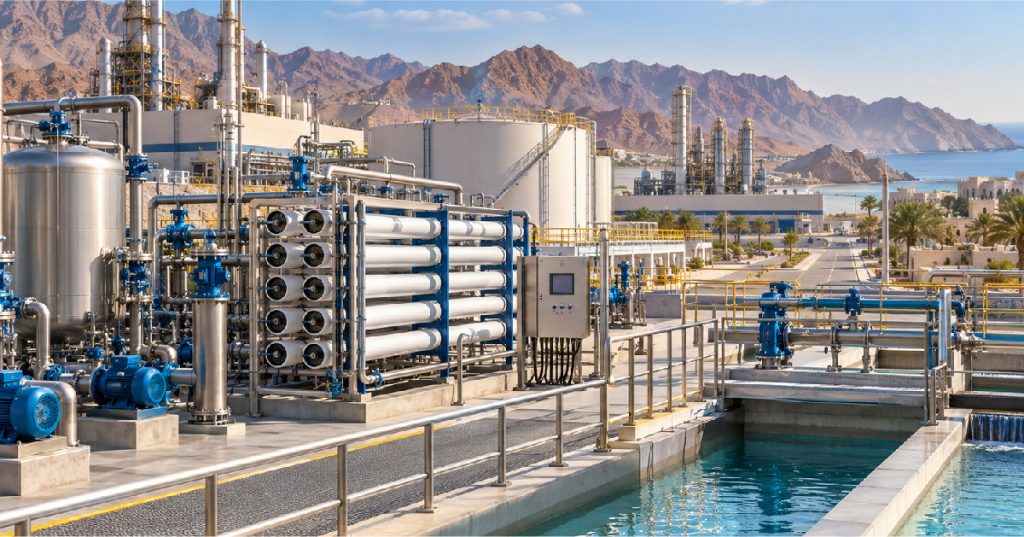
Water rarely gets the same attention as production equipment until something goes wrong. A rise in scaling, unstable boiler-water quality, membrane fouling or wastewater outside acceptable limits can quickly turn a utility issue into an operational one. That is why industrial water treatment Oman facilities rely on should be viewed as part of plant performance, not simply as an environmental requirement.
For industries operating across oil and gas, steel, food and beverage, power, chemicals and other process-intensive sectors, water quality influences equipment condition, production continuity, operating cost and workplace reliability. The real opportunity is to manage water as one connected system, from incoming supply and process use to treatment, recovery and final discharge.
Why Industrial Water Treatment in Oman Matters to Plant Performance
Industrial facilities use water for very different purposes. Cooling towers may require control of scaling and biological growth. Boilers need carefully managed feedwater. Manufacturing processes can demand consistent water quality, while wastewater streams may contain suspended solids, dissolved salts, oils, organic matter or process-specific contaminants.
A properly designed industrial water treatment system addresses these conditions before they become production problems.
For example, untreated hardness can encourage scale formation on heat-transfer surfaces. Corrosion can shorten equipment life. Fouling can reduce membrane or heat-exchanger performance. Inconsistent wastewater treatment may also create compliance challenges.
This is why experienced water treatment companies Oman industries work with should begin with the actual water chemistry, process requirements and intended end use rather than simply selecting equipment from a standard catalogue.
How Better Water Treatment Improves Industrial Efficiency
Efficiency in water management is not only about reducing water consumption. It is about getting more dependable performance from the entire water cycle.
Protecting Critical Equipment
Scaling, corrosion, suspended matter and microbial growth can interfere with boilers, cooling systems, pipelines, membranes and process equipment. Treatment technologies such as filtration, softening, reverse osmosis, ion exchange and specialised chemical programmes can be configured around the specific operating conditions of a facility.
The right industrial water treatment system therefore supports more stable plant operation while reducing avoidable stress on equipment.
Ion Exchange also provides instrumentation for parameters including pH/ORP, conductivity, resistivity, dissolved oxygen, turbidity and ammonia, helping operators maintain closer visibility over water and wastewater conditions.
Making Water Reuse Part of the Process
A well-designed water treatment plant Oman operators invest in can go beyond producing treated water for a single application. It can also create opportunities to recover and reuse water from wastewater streams.
Depending on wastewater characteristics and required reuse quality, treatment may combine biological processes, filtration, ultrafiltration, reverse osmosis and other advanced technologies.
Consider a plant that sends every treated wastewater stream directly toward disposal. If part of that water can instead be safely recovered for utilities, cleaning, cooling or another suitable application, water management starts contributing directly to resource efficiency.
That shift from “treat and discharge” to “treat, recover and reuse” is increasingly important for industrial water strategy.
Industrial Wastewater Treatment Oman Facilities Need for Safer Operations
Safety is often discussed in terms of machinery and personnel procedures, yet water chemistry can also create operational risks.
Poorly controlled industrial wastewater may contain oils, chemicals, high dissolved solids, organic pollutants or other contaminants depending on the process. Treatment must therefore be matched to both the wastewater profile and its final discharge or reuse route.
In Oman, discharge or reuse of treated wastewater requires the relevant licence and environmental permit, while technical requirements under applicable wastewater regulations must also be followed. The Environment Authority also requires supporting information such as recent water sample analysis for relevant applications.
Effective industrial wastewater treatment Oman projects therefore need to consider compliance during process design rather than treating it as a final-stage paperwork exercise.
A practical sequence is:
Water characterisation → treatment objective → process design → monitoring → laboratory verification → reuse or compliant discharge.
When these stages are considered together, the treatment plant becomes easier to operate, monitor and adapt.
Choosing the Right Water Treatment Solutions Oman Industries Can Rely On
There is no universal treatment configuration for every facility.
A refinery, beverage plant and steel facility can have very different feedwater quality, wastewater characteristics and process requirements. Even two plants in the same sector may need different treatment trains because of operating conditions or reuse objectives.
Before selecting water treatment solutions Oman businesses should assess:
- Feedwater and wastewater characteristics
- Required treated-water quality
- Variations in flow and contaminant load
- Potential water-reuse applications
- Space and utility availability
- Monitoring and automation requirements
- Operation and maintenance capability
- Applicable discharge or reuse requirements
This evaluation helps prevent both under-designed plants and unnecessarily complex systems.
It is also where experienced water treatment companies Oman operators engage can add considerable value. Technology selection should follow the process requirement, not the other way around.
Where Advanced Treatment Technologies Fit
Different treatment objectives call for different technologies.
Membrane Bioreactor technology combines biological treatment with membrane filtration and can support applications requiring high-quality treated effluent. Reverse osmosis is widely applied where dissolved salts need to be reduced. Ion exchange resins can support applications such as softening, demineralisation and selective ionic contaminant removal. Where extensive water recovery and minimisation of liquid discharge are required, Zero Liquid Discharge systems may combine membrane and evaporation technologies.
The important point is integration. A modern water treatment plant Oman facilities depend on should be designed around how each stage affects the next, rather than treating pretreatment, purification, wastewater treatment and recovery as disconnected systems.
How Ion Exchange Supports Industrial Water Management in Oman
Ion Exchange operates in Oman through Ion Exchange & Company LLC, a joint venture with Hofincons & Co. LLC. Its Oman operations provide water and wastewater treatment products, solutions and services for industries including oil and gas, steel and beverages, as well as institutions and communities.
Its capabilities cover raw-water treatment, membrane systems, ion exchange, industrial wastewater treatment, water recycling, sewage treatment and Zero Liquid Discharge, alongside services such as operations and maintenance, plant rehabilitation and modification, audits, consultancy, consumables, spares and remote monitoring.
This integrated approach matters because the most effective water treatment solutions Oman industries deploy are rarely isolated pieces of equipment. They need to work within the plant’s production objectives, water balance, maintenance strategy and regulatory requirements.
For businesses reviewing effluent management, Ion Exchange’s wastewater treatment solutions and Zero Liquid Discharge solutions are useful internal resources to explore alongside its broader industrial water treatment capabilities.
Build Efficiency and Safety Into Water Management
The strongest case for industrial water treatment Oman businesses invest in is not simply cleaner water. It is greater control over an essential production resource.
When incoming water quality, utility requirements, wastewater treatment, recovery, monitoring and compliance are managed as one strategy, businesses can protect critical equipment, improve operating stability, create reuse opportunities and manage environmental obligations more systematically.
Ion Exchange combines treatment technologies, engineering capability and lifecycle services to help industries develop water-management systems suited to their operating requirements.
Looking to improve your industrial water or wastewater performance in Oman? Connect with Ion Exchange experts to evaluate your plant requirements and identify the right treatment, recycling or Zero Liquid Discharge approach.
Frequently Asked Questions
1. What is industrial water treatment?
Industrial water treatment involves treating water used in manufacturing, utilities and industrial processes to achieve the quality required for applications such as boilers, cooling systems, processing, cleaning and production.
2. Which technologies are commonly used for industrial water treatment in Oman?
Depending on water quality and application, treatment may include filtration, softening, ion exchange, reverse osmosis, ultrafiltration, biological treatment, MBR systems and advanced wastewater-recovery technologies.
3. Why is industrial wastewater treatment important in Oman?
Industrial wastewater treatment Oman facilities implement helps remove contaminants, support water-reuse opportunities and manage wastewater according to applicable environmental discharge and reuse requirements.
4. Can treated industrial wastewater be reused?
Yes, where treatment quality and applicable requirements allow it. Depending on the application and treatment level, recovered water may potentially be reused for cooling, cleaning, utilities, irrigation or selected industrial processes.
5. How should businesses choose an industrial water treatment system?
Selection should begin with feedwater or wastewater analysis, required output quality, flow variation, reuse goals, compliance requirements and operating conditions. The most effective industrial water treatment system is one designed around the facility’s complete water cycle rather than a single treatment stage.